
Samsung says the new Galaxy S9 will feature a “redefined” camera. But unless your current phone is nearing death, you probably don't want to pay more than $720 for this new phone.
Because the cameras on other high-end devices are also pretty good. Today, camera performance is one of the main differentiators of smartphones. If you have a modern smartphone, it probably already has a decent camera. With the advancement of technology, there is now almost no difference in camera performance between the latest models.
In many test shots, the S9 outperformed rivals like Apple's iPhone X, Google's Pixel 2 XL, and Samsung's own Galaxy Note 8. Still images were more detailed and less distorted. But without looking carefully at the captured image, the difference is not obvious. Color tones vary, but that's a matter of personal preference. In some cases, the S9 did worse than the other three phones.
◆ Light intensity adjustment function For the first time as a major smartphone, the S9 is equipped with a variable aperture that allows you to adjust the light intensity. When shooting in low light, the shutter is released 12 times in quick succession, and the software synthesizes the best shots.
These changes slightly improved the quality of the photos. Evening skies tended to be darker and less distorted. The image of Abraham Lincoln was not grainy. Stills shot with the S9 often had a sharp contrast between black and white.
But these differences were very small. To take a good photo, it would be more effective to hold your hand firmly to avoid camera shake.
Super slow motion function The biggest feature of Samsung's new camera The feature is the super slow motion function. Jumping people look frozen. Where the waterfall trickles, it's deadly still. This feature brings a new perspective to the classic prank of a toy snake jumping out of a can. If a snake floats in the sky, it's not so scary.
A little gimmick, but a fun feature.
This super slow motion feature only allows you to edit the length of a fifth of a second at a time. When playing, it will play for 6 seconds. Auto-sensing is key to capturing the right moment. It's fun to watch people jump slowly, but it's not fun when they're almost on the ground before the slow-motion feature kicks in. A lot of trial and error was required.
Furthermore, super slow motion videos tend to look darker and grainier than stills and normal videos, especially when zoomed in. This feature will work best outdoors where there is enough light and moving objects are far enough away.
◆What did you say? Bixby, Samsung's virtual assistant, provides simple translations by tapping the camera. Simply point your smartphone at a sign or similar and it will tell you what it means in English or another language of your choice, in similar fonts and colors.
Bixby has better character recognition than Google Lens, which has similar features on Pixel phones. But the Thai, Portuguese, and French 'stop' signs were translated as 'first', 'shield' and 'crazy' respectively. However, Indonesian was able to translate correctly. Bixby can also handle long sentences in posters and documents.
◆ Point the camera at food to help with dieting, and the nutrition facts will be displayed. When I pointed the camera at the burger and onion rings, the calorie count was mostly correct. However, the roast beef sandwich was not recognized well, and was recognized as a pastrami sandwich or a Cuban sandwich depending on the angle.
All calories are listed as a single serving, so it's not as useful as Bixby, which tells you that the mac and cheese you just ate is actually three servings, which means three times the calories. But wouldn't the calories that don't show up on the screen also contribute to weight gain?
◆Other features The S9+ model, which is larger than the S9, is equipped with a second lens with double magnification performance. I haven't tested the S9+, but similar features on other phones work better for zooming.
Both the S9 and S9+ are equipped with a function that automatically generates your own emoticons from selfies and allows you to share them via the message function. ing. Some people might like it. But I don't need it. Let's move on to the next feature introduction.
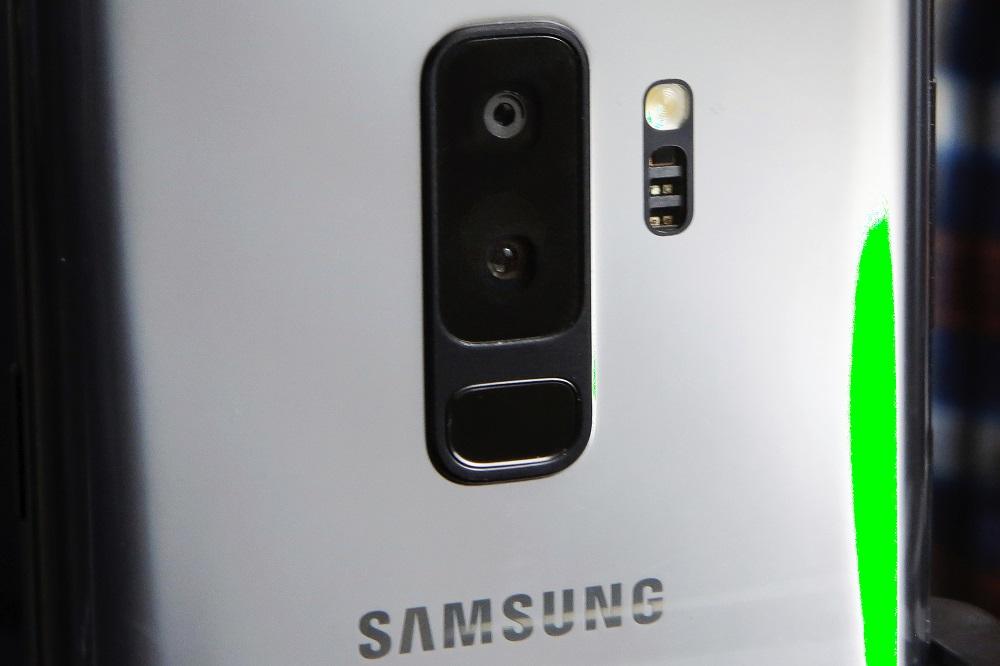
The new model is easier to unlock with face recognition. Past Samsung smartphones have had iris scanners, but they sometimes don't work well in bright sunlight. The S9 makes up for this with facial recognition, but it's a bit less secure. That's why Samsung doesn't use facial recognition for bank account transactions and other sensitive apps. You can use face recognition for unlocking, but you can turn this feature off if you're concerned. In any case, authentication is still difficult when the user is wearing glasses. There is also a fingerprint sensor on the back as a backup. The fingerprint sensor has been moved slightly to keep the camera lens clean.
Other than that, the phone's design hasn't changed much since last year's S8. But that's okay. You don't have to fix what isn't broken. The important thing is the function of the phone and the function of the camera.
By ANICK JESDANUN, AP Technology WriterTranslated by Y.Ishida